December Updates: Public Sharing, New Network Metrics and a Richer Knowledge Base
Public sharing feature, three essential network observations, comprehensive Knowledge Base overhaul, improved chart tooltips, and UserAgent consistency fixes.
Learn how to troubleshoot WebRTC applications, monitor real-time communication performance, and get the latest insights on WebRTC development and debugging. Here we'll also share the latest improvements delivered in the new releases of rtcStats.

Public sharing feature, three essential network observations, comprehensive Knowledge Base overhaul, improved chart tooltips, and UserAgent consistency fixes.

Redesigned Streams and Connections pages with deeper insights, integrated Knowledge Base, enhanced pair timelines, and new network observations.

Meet Observations: a set of best practices that see WebRTC issues before you do, saving you time so you can focus on what matters most.

Complete revamp of charts component with themed grouping, expanded connectivity observations, and new audio MOS aggregation.

Discover the 'less is more' approach to WebRTC monitoring: collect everything but focus on what matters most for faster troubleshooting.

Complete redesign of the Internals page into focused panes, new connection setup observations, and improved user experience.

Learn how to build your own WebRTC monitoring solution with rtcstats. Control costs, own your data, and customize your metrics collection.

New audio troubleshooting features, enhanced connection analysis, and team collaboration tools to improve your WebRTC debugging experience.

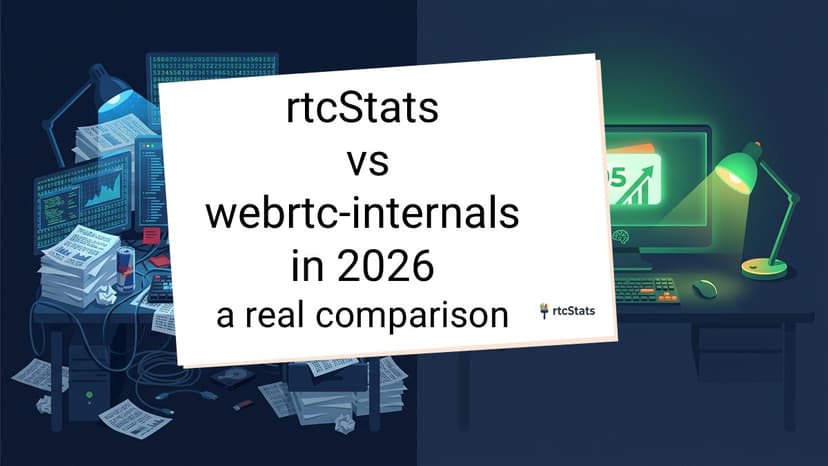
Yes, webrtc-internals can be improved upon. Discover its limitations and how rtcStats provides a better solution for WebRTC monitoring.

Stay up to date with the latest rtcStats releases and discover new features designed to enhance your WebRTC debugging experience.

Discover why server-side monitoring isn't enough for WebRTC and how device-side statistics collection can transform your user experience.
Browse articles by category